Monday, June 4, 2018

Designing a Moment

I've been thinking about what it really means to write a roleplaying game, what it means to play one with friends, and what meaning one should attempt to garner from making and playing one. Part of this was me writing the Making Decisions nonsense I did before, but I'm also trying to think if I can make something which takes into account all of the ideas I've been thinking and rhetoric I've been spouting. The Hell game is taking an eternity, as it always has and always will, but I want to explore something else while this is happening, to have something a little bit less serious which I can share and show off. Because of this I've been thinking about making a set of games, and specifically having one or two to show off at the Yurt trip up to Alex's work.

The goals of each of these games will be three fold:

  1. To give enjoyable and interesting experiences to the people playing, which they can take with them.
  2. To allow for the creation of interesting stories which people can incorporate into the stories they tell if they see so fit.
  3. To provide an alternative interpretation of how to use mechanics and games which people can take or use to further think about games.


There will be a few assumptions for the games which I want to create:

  1. I will attempt to use them to convey a scene/emotion/idea. (For instance: looking in the mirror in the morning for the first time in a while and noticing everything about your face, only for the steam from the shower to fog it up and to loose oneself in the steam. Or the sweet sensation of rubbing vanilla ice cream all over your naked body.)
  2. Each game will be a one off, with any continuity only existing in how the players construct the narratives and characters. (If Liz wants to only make Guys and make an overarching plot about how they are all running from the Devil Bloperdink, cool, but that will not be inherent in the rules of the game)
  3. I will attempt to use a new mechanic/idea from other games to make for interesting decisions and a new mechanic/idea from rpgs to make for narratives which conform to what the players want and think.
Hopefully I will have 1-3 of these done by the end of the summer, and will be able to "publish" them as something between a 1 page RPG and a print and play board game. Here are some of the ideas which I've had so far:


WIZARD SQUABBLE
A group of Wizards realize they didn't get what they wanted after the treasure has been divided up. We tune in to see their WIZARD SQUABBLE after the fact.
Feeling: The person in front of you in line got the last ice cream on a hot summer day. Seeing the person you have a crush on hanging onto the arm of someone you knew in high school.
"New" Game Mechanic: Writing down actions ahead of time and resolving them in order.
"New" RPG Mechanic: Having an explicit group consensus/discussion on how each individual thing will resolve and turn out.

S T O C K  P H O T O S
Shopkeeper
We follow the lives of a number of residents of a town as their lives indirectly effect each other. In the end, the residents all talk at their funeral.
Feeling: Hearing someone else describe how you've changed in the last few years. Looking in the mirror and noticing what looks the same and what looks different.
"New" Game Mechanic: Players will draft components of their character's life and combine them to make who they are.
"New" RPG Mechanic: At the end of the game, everyone else gets to talk about what they say at your funeral and what they though of your character.

I hope to experience these game with you, dearly avid reader, and to share these experiences and what we think about them. Hopefully we can both shape each others understanding of games, and use it to be better players, designers, and people.

Sunday, June 3, 2018

Why are you special?

I like to think that I think a lot about how stuff works in my games. In fact, I like to think that I think too much about thinking about how much I think about how stuff works in my games, and yet I had not until recently thought about thinking about an in universe explanation for why our Heroes of Hell have unique mechanics. Unthinkable.

I had thought from time to time about why the PC's would end up going on an awesome quest in Hell and being able to make a big change, but never quite got down to level of why each of them individually were able to do the awesome things. In this post, I hope to explain to you, my avidly dear readers, why each of the characters has their power and acts in the way they do.


The Bard:
The power of the Bard comes from their belief in the power and reality of their own story and truth. The Bard is an artist who believes that what they say is true and worth sharing. For this reason, in Hell their story is true and worth sharing, meaning they have the ability to sculpt their own reality in a way no other character has.

The Crusader:
The power of the Crusader comes from their belief and representation of an idea. Instead of trying to understand many frameworks and thoughts, the Crusader takes one and becomes the master of it, applying its reality to all facets of the world. This single minded determination bends reality to fit into their understanding, and gives the Crusader dominion over their singular interpretation.

The Fake:
The power of the Fake comes from their understanding that the ultimate function of something is more important than how that function comes about. Nine times out of ten, reality deals with black boxes whose content is unimportant. By knowing and understanding this, the Fake has the power to change the outside of a box without bothering with the inner workings, and so has the power to manipulate how they are perceived and function in the shallow world of Hell.

The Genius:
The power of the Genius comes from their belief that given the time, resources, and will, they can do anything they wish to. They are much more engineer than scientist: more Elon than Einstein. This means that the Genius is a master of reality, who can wield the most powerful forces and cause the most impressive effects, as long as they have enough minutes in the day, dollars in the bank, and shits to give.

The Lord:
The power of the Lord comes from their belief that they should be the one to lead. Whether through birthright or earned through practice, the Lord knows that they should be in charge. Though they are not above getting their hands dirty, they know that their place is at the head of the table, giving orders, passing judgment, and planning big plans. This gives them dominion over those looking for someone to give their services too, those looking for someone who is fit to rule.

The Priest:
The power of the Priest comes from their knowledge of the importance of ideas. Not just knowledge of what is, but of the frameworks and understandings which we put together to represent these things. If they were to write a book it would be called Maps of Meaning,  and it would detail how to create an ideology which could change the way that people look at the world around them. They are able to shape these ideas and understand and effect reality in a way that someone who didn't understand this never could.

I actually do think this image is pretty cool, even if I hate Peterson.
The Rebel:
The power of the Rebel comes from their understanding of the power of relationships. Everyone says its not what you know, its who you know, but only the Rebel is able to take these relationships and understand them well enough to turn them into power.

The Thief:
The power of the Thief comes from their understanding that the concept of individual ownership is not as important as we think it is. Of course this is clear when you take physical objects from people, but it is also true of stealing ideas, copying looks or style, and appropriating techniques and approaches. Even if one has a quality, that does not mean that they alone are that quality, or that it can not be taken from them. By understanding that one does not own beauty, the Thief is able to be beautiful like no one else is.

The Villain:
The power of the Villain comes from their belief that they are special; that they are the chosen one who can on their own cause great changes to the world. The Villain believes that they are above others, they are unique amongst sameness, they are a wolf among sheep. This power means that the Villain are able to put themselves above others and do things which the "plebeians" can not.

A big part of why I ended up thinking about and writing about this particular idea is first reading this article and then Alan Moore's Promethea and thinking about their connection to "self-referential reality" and specifically the characters I made to inhabit and represent ideas and ideals in my Hell game. As always, if anyone reads this and has thoughts please bother me with them, as talking about these ideas is probably my favorite thing other than making jokes about smearing vanilla ice-cream all over my naked body.

Saturday, June 2, 2018

Wizardy, Sorcery, and Theft

Much has changed since I last posted anything about the my Hell game here. After all it has been literally years. Today I wanted to share with you what I have done of the current classes so far. Much of this won't make sense without the greater context of the game and what all the words mean, but that's ok. If you read this now and are intrigued, then ask me for my current version of the PH/Design Doc/Whatever I'm calling it. If you are reading this far into the future, chances are that time has passed you by and there is a better place to both find these ideas and to find me talking about what it all means.
My next post I suspect will be an exploration/summary of where each of the character's powers come from.

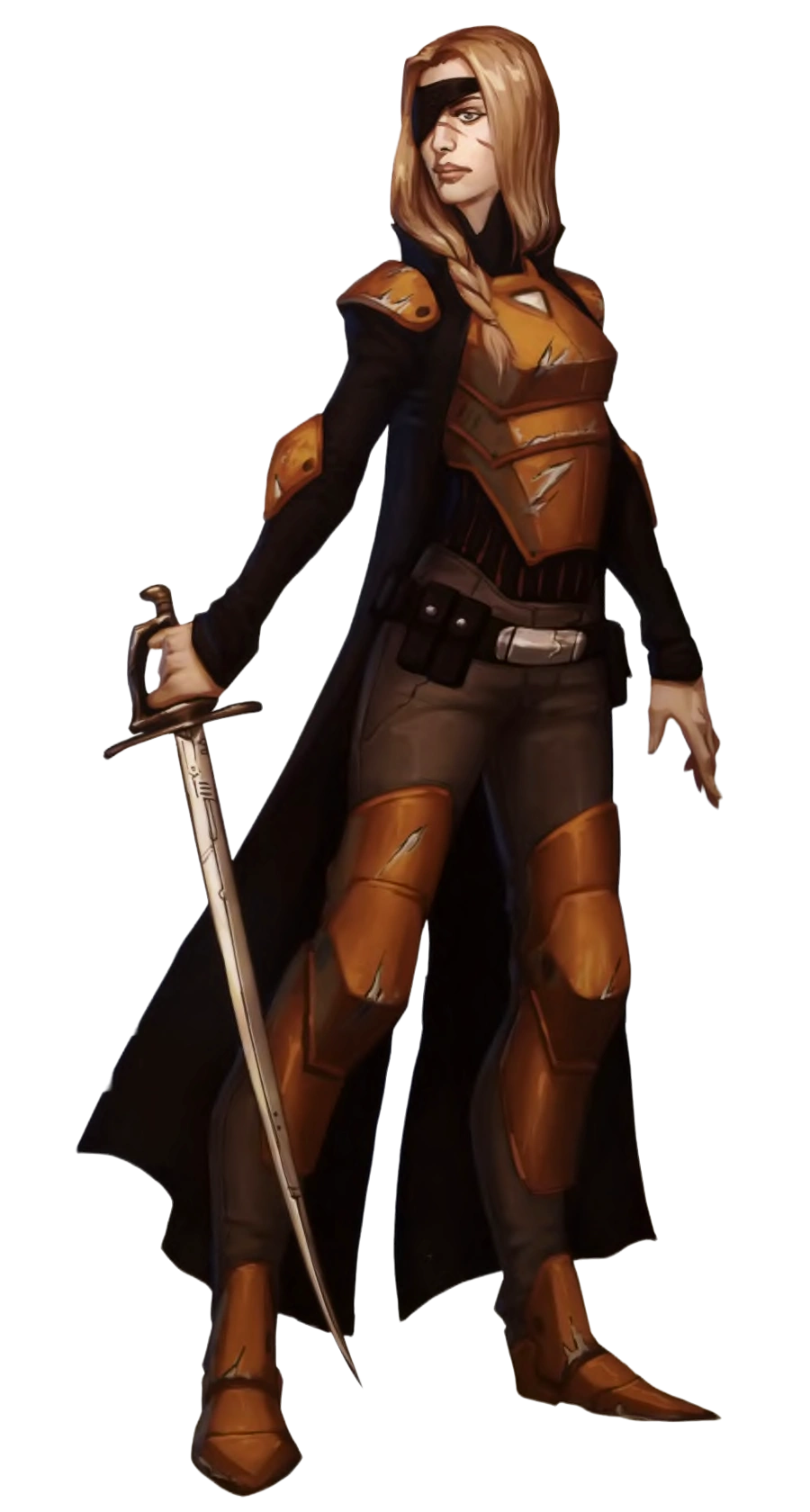
The Genius

The Genius was a respected and distinguished leader in their field, who was working on an awesome and terrible project for their organization. An outside force came and threatened the Genius, forcing them to be their spy and work against the original organization. Eventually, the Genius' betrayal was discovered, and brought about their demise.

The Genius's power is to prepare terrible and powerful spells which they can unleash to great effect. Any number of spells can be prepared or learned, the only limitation is the Genius' time, resources, and desire to do so.

Play the Genius if you want to create plans and manage resources to wield the most powerful magics to overcome the largest obstacles.

With the Genius, you have access to the widest variety of the most potent rituals, and can learn any of them your character wants to. However, your magical abilities rely on the resources available to you, and failure to manage them well could leave you with many problems.

Examples: Walter White, Rhialto the Marvelous

Str: 9
Int: 18
Wis: 14
Dex: 15
Con: 9
Chr: 12

HP: 8

+lvl: Engineering, Math
+lvl/2: Science, Subterfuge

Traits:
Cowardly ● ● ○ ○ ○
The Genius is terrified constantly and excels at taking any and all opportunities to avoid conflict. This character is the sort of person who would know not to engage in any risky behavior with their assets necessary for survival or would go their entire life without stepping foot in water deeper than an inch.
● – Can check to evaluate the danger of any given situation before getting entangled in it.
● ● – Can quickly disengage from dangerous situations without provoking any immediate response from the engaged characters.

Ingenious ● ○ ○ ○ ○
The Genius is not only very smart, but also apt to apply their intelligence in new and novel ways to solve difficult problems. This character is the sort of person who would give MacGyver a run for their money or fix their car's engine with duct tape and glue instead of buying a new one.
● – Can check to attempt to solve problems without the necessary tools or materials and only a work around and a good description of the method used.

Wizardry:
As the Genius your magical powers all come from your ability to understand and exploit the reality of the world around you. This is done by preparing powerful spells ahead of time and then releasing them once ready. There is no limit to the power and number of spells which can be prepared before hand; however, the time and resources required along with the chance of catastrophic failure steadily increase with the ambition of the caster. The Genius' repertoire is also limited to what they can understand themselves doing, meaning some spells will be off limits based on their Traits.
The number and power of the spells which the Genius has easy access to is based on their level, and detailed in the chart below.


Genius Spell Limits


Level Rank 1 Rank 2 Rank 3 Rank 4 Rank 5
1 1 - - - -
2 2 - - - -
3 2 1 - - -
4 3 2 - - -
5 4 2 1 - -
6 4 2 2 - -
7 4 3 2 1 -
8 43 3 2 -
9 4 3 3 2 1

In order to prepare a spell, the Genius must already know the spell, must have access to materials to create physical components to store the magic, and then spend time in relative peace. If the Genius currently has less spells prepared of the Rank than they are allowed, (as can be seen above) then the preparation takes materials which have no cost and only 10 mins per Rank to prepare fully. If the Genius has access to spells of a given Rank, but already has the above amount (or more) prepared, preparing another takes materials costing 10^(Rank) SP and 1 hour per Rank. If the spell you are trying to prepare is of a higher Rank than you currently have access to, it costs 10^(Rank + 1) SP, takes 4 hours per Rank, and has a failure chance of 15% for every Rank it is above your max castable Rank. This can be offset by 1% for every Rank in an applicable Trait your character has. This failure chance is rolled only when the prepared spell is attempted to be cast. If the spell fails by 10% or less it still occurs but goes a long with a side effect. If the spell fails by 11% to 20% it simply fails to happen. A failure of more than 20% causes a magical backlash which is catastrophic for the caster and any nearby.

In order to learn new spells to prepare, the Genius must first make sure that they don't conflict with their Traits. If the Genius wishes to learn a spell whose powers are at odds with one of their Traits, they must first bring the Trait to Rank zero. Whenever the Genius gains a level, they may learn a new spell of their devising which matches one of their Traits. When inspiration strikes, they have no need to spend any money and the process only takes 8 hours, regardless of the spell's Rank. If the Genius already has a copy of the spell in question, they may learn it simply by taking one day per Rank of the spell to decipher its contents. Finally, if the Genius wishes to learn a spell without already having access to a copy of it, they may spend one thousand SP per Rank of the spell and three days of time per Rank of the spell. This process has a failure rate equal to if the Genius tried to cast the spell. (15% per Rank above current possibility - 1% per applicable Trait Rank)

Casting a spell is as simple as releasing the energy stored in the materials used to prepare it. This means that the materials are used up and destroyed when the spell is cast and that only prepared spells can be cast. There may be some ways for the Genius to mitigate the failure rate of preparing or learning powerful spells, but these are rare and powerful in the extreme.


Preparing Spells If... Material Cost Time Failure Chance
Fits within the chart 0 SP 10 min/Rank 0%
Fits within Rank but not # 10^(Rank) SP 1 hour/Rank 0%
Doesn't fit Rank 10^(Rank +1) SP 4 hour/Rank 15*ΔRank - Traits


Learning Spells If... Material Cost Time Failure Chance
Lvl Up + Match Trait 0 SP 8 Hours 0%
Have Copy of Spell 0 SP 1 day/Rank 0%
No Copy of Spell 1000 * Rank SP 3 days/Rank 15*ΔRank - Traits

Failure results
under 10% Negative Side Effect
11% to 20% Harmless Fizzle
over 20% Catastrophic Side Effect

The Villain


The Villain was a scourge on the land, spreading their dark power into all the cracks and crevices of the world. Eventually they got their hands on a captive who even the Villain couldn't bring themselves to kill, and eventually let go free. The release of the prisoner was the Villain's one redeeming act, and it brought about their demise.

The Villain's power is to invoke powerful Sorceries core to their being without relying on any outside objects, ideologies, or relationships.

Play the Villain if you want to wield terrible forces inherent to you, which no one else can have any effect on.

With the Villain, you can create an island with completely customizable powers which rely only on themselves . However, this power relies on managing their carefully constructed personal and public identity.

Examples: Elric of Melniboné, Gul'dan

Str: 10
Int: 16
Wis: 17
Dex: 11
Con: 13
Chr: 8

HP: 12

+lvl   : Intimidation, _____
+lvl/2 : Philosophy, Authority

Traits:
Distant ● ● ○ ○ ○
The Villain is a solitary person who relies solely on themselves whenever possible. This character is the sort of person who would feel comfortable living alone in a cabin in the woods for 5 years or would feel no remorse eating a pet when stuck on a desert island.
● – Can check to avoid a reaction to any circumstance while putting on sun glasses and walking into the sunset.
● ● – Can posit a question and receive an "objective" and "rational" answer which doesn't rely on or include the emotions or "subjective" aspects which may go along with the answer.

Thoughtful ● ○ ○ ○ ○
The Villain is a pensive person, who thinks deeply about ideas which are important to them. This character is the sort of person who would have a complicated and detailed reasoning for their walk to work every day or would spend two hours in the shower thinking about if a burrito is a sandwich.
● – Can check to ask others to contribute to the character's internal monologue when pondering.

Sorcery:
As the Villain, your personal brand of magic comes simply and naturally to you. Wielding these powers is intrinsic to your own personal view of yourself, much as writing is to a writer, drawing to a drawer, or dancing to a dancer. For this reason, your sorcery requires no preparation before hand, no long arduous rituals, and no complicated wheeling and dealing; it can simply be done.
The magical actions available to the Villain are known as Sorceries. These use the individual magic reserve of the Villain, known as Mana. At any given time, the Villain can hold only a number of Mana points equal to lvl x 5, and can only spend up to lvl x 3 on any given Sorcery. Spending Mana equal or less than the Villain's level on a Sorcery is considered "casual" expenditure, which provides some benefits detailed below.

The Sorceries available to the Villain stem from their perception of who they truly are, defined in Hell as their Traits. For each level of each Trait, the Villain gains another Sorcery which they can use, meaning as they gain a clearer image of themselves, they also gain a clearer image of what they can do. The first Sorcery gained from any Trait will always provide a way for the Villain to gain Mana, with the subsequent Sorceries providing impressive effects which can be used to spend it.

Each Sorcery is defined rather simply, with only the mechanical effects below. This is not because the flavor of each of these Sorceries isn't important, but because the exact nature of the Villain's power is intended to be defined and fleshed out by the player instead. Primarily, it is important for the Villain to have some description for how their power operated when they were alive, and now that they are damned in Hell. This could be the destructive psychological manipulation of others using dark and terrible techniques, an inherited family power to breech the walls between worlds and bring in demons to do your bidding, or something else way cooler that you come up with. Each Sorcery should then be adjusted to fit with the overall flavor. The Animate Defeated Sorcery could be the Villain whispering dark threats to the downed creature stupefying it into a mindless zombie who follows orders, it could be tempting ravenous demons with the corpse of the fallen and then cajoling them to stick around, or it could be something way cooler than either of those. This may partially change the nature of how precisely the Sorceries work, and thats fine.

The Villain's Adjectives can also change how their Sorceries manifest over time. On the surface, Sorceries will change their aesthetics to match the Villain's Adjectives. More interestingly, each new rank will bring with it a new way to change each Sorcery. For the first rank of the Adjective, this is always an opportunity to use a Sorcery without spending Mana if the use aligns with the Adjective and the Mana spent is at or below Casual usage. Past this first modifier, a new one is unlocked at each new Adjective rank with the exact modification determined by the Adjective in question.

Starting Powers:
Basic/Universal
Blast – Fire a ranged attack which does 1d10/Mana spent on a hit

Distant ●
Death Absorption – Can desecrate a helpless being at 0 HP to gain 1 Mana per Hit Die of the effected creature. This destroys their form and prevents them from healing under normal circumstances.

Distant ● ●
Animate Defeated – Can spend 1 Mana/HD on a helpless being at 0 HP to create a (mostly) mindless minion of the same HD.

Thoughtful ●
Meditation – May enter a meditative state which allows for reduced outside effects and the recovery of Mana. Can be used to great effect and time outside of combat (~1 Mana/Hour) or for just a round in combat to gain 1 Mana.


Max Mana Pool:                       lvl x 5
Max Mana per Sorcery:            lvl x 3
Max Mana on Casual Sorcery: lvl


The Thief


The Thief stole with from whomever they desired with not a care in the world, spending weeks and going days without rest to take well earned prizes from their victims. This eventually all came crashing down when they acquired knowledge they shouldn't have, and brought about their own demise.

The Thief's power is to steal not only physical objects, but also the have access to take form the Material, Mind, and Mouth of anything/one encountered in Hell.

Play the Thief if you want to have a finger in everything else's things, knowledge, and relationships, and be able to take them for yourself.

With the Thief, you are never at a dead end and can gain something more with just a little risk and clever use of your powers. However, all this requires keeping and organizing what you know about the other members of Hell along with what you have taken from them.

Example: Cugel the Clever, 

Str: 11
Int: 16
Wis: 8
Dex: 17
Con: 10
Chr: 13

HP: 12  

+lvl   : Subterfuge, Finance
+lvl/2 : Combat, Science

Traits:
Obsessed ● ● ○ ○ ○
The Thief is single minded in their approach to tasks and can easily suffer from tunnel vision and chase goals even after it becomes impractical to do so. This character is the sort of person who would pull 2 all nighters to finish their project right before it was due or would stalk a prospective romantic partner over weeks in order to set up "accidentally" bumping into them and using their gained knowledge to convince them on a first date.
● – Can check to ignore "distractions" when working on and continuing an obsession.
● ● – Can freely follow and track one designated "goal" or "target" even as this would normally become all but impossible.

Inquisitive ● ○ ○ ○ ○
The Thief is relentlessly curious about the world and people around them, and explores those ideas vigorously. This character is the sort of person who would actually be interested in your obscure thesis or would ask embarrassingly personal questions about you in public.
● – Can check to get answers from the DM about things that they probably don't know through investigation.

Theft:
As the Thief, you can "steal" anything you know about. This can be from people, places, things, organizations... pretty much any reasonable noun. The most basic version of this involves simply taking objects you can see from the entity in question. If you want something which isn't visible or you don't know about, you can instead perform a "pat down" to try to get knowledge of the objects the target has on them. The same basic principles apply to taking knowledge from the involved party, or understanding their relationships with others. 

The Thief can go deeper than this, not just taking the surface effects of the Material, Mind, and Mouth, but instead stealing aspects core to them. This once again requires knowledge of what is intended to be stolen, which again can be gained through a "pat down" or information gathering check. Once the Thief has an understanding of the physical properties of the target's Material, the Traits of their Mind, or the Adjectives of their Mouth, they can take what those grant the character those properties. This can either occur to take them away from the effected entity for a given time, provide them to the Thief for some duration, or to provide the Thief with a "token" of what has been stolen to put on their character sheet for use at another time. Some examples of what can be taken are taking the spit of a Dragon to allow you to breathe fire like one (Material), telling a guard a confusing story about renovations in the base so they loose their orientation (Mind), or picking the mannerisms of a Pit Fiend in order to emulate his pompousness at a later date (Mouth).

All of this is done with a check on a d20 using Dex/Int/Chr for Material/Mind/Mouth plus lvl if it aligns with a relevant Trait, with a success on a 10 or higher. The level of success determines how long it will take the target to realize they've been swindled, or sometimes just that something suspicious has happened, (chart below) in addition to how long before stolen "abilities" will expire. Every previous theft in the encounter will cause a -1 on the next roll, as your repeated suspicious actions become more and more likely to attract attention. Thefts against especially powerful or aware entities may cause addition penalties, and strategies taking advantage of the flaws or weaknesses of the target, the surroundings and environment, or using previously acquired resources could provide bonuses.
Just like other actions in this campaign, the details of how the theft is approached should be described and spelled out. This can involve describing how pockets are picked, the lines given to convince someone to divulge sensitive information, or how one studies and imitates another's mannerisms and style.

Time Table
10Immediately
111 round
121 min
135 mins
1430 mins
151 hour
164 hours
1712 hours
181 day
191 week
20+1 month

Thursday, May 31, 2018

Making Decisions Part 2

When I sat down to write about making decisions last time I really wanted to write this post, but I felt like I had to start with the foundation that every game should have some underlying goals. With that fundamental assumption out of the way, I'm excited to write about what I really wanted to talk about: Everything.

Everything that happens, should happen for a reason. Every decision can be used to say something, to make your players feel something, to encourage them to do something. Part of why I love roleplaying games so much is that everything is completely mailable, and can happen anyway people want it to. These games are no more than a shared hallucination, a reality built upon conversations and understandings, the archetypal social construction. By changing how the stories we create are told, by adjusting the rules and tone of the systems we use, we can adjust the stories in whatever way we want. With this in mind we can look at everything about our games and ask how we should change them to better suit our goals. Now I'm going to talk about some of the things I think I have learned by looking at game design through this lens, and maybe some of my words can help you.


The first thing I learned was that its easy to just use the rules which are already in the book. The less questions you are forced to ask about the basic and not so basic assumptions which a system makes the less work you have to do. Its much easier to assume that all the decisions which the system's designer made are the right ones for you and to just take them, but this isn't always the case. HP in D&D assumes you want heroes who can take risks and get hit without permanent consequences, the skill system in WoD assumes that each skill and stat will be equally useful in your game, and Champions assumes that you are a robot who derives pleasure from balancing your hero's checkbook and meticulously simulating 12 second of combat over the course of 8 hours. For many groups and games these assumptions may be correct, but its worth taking the time to stop and think if the game which is presented in the rules is really what you want to play. For me personally, the answer "because thats what the book says" is never a sufficient reason to keep a rule the way it is.

That being said, its also easy to not realize the value in a group's continuity of rules. For the most part, everyone will assume that things are the way they were before or how they have always been, and changing these assumptions can come as a shock. If people have been playing with the same understanding of elves in their games for decades then suddenly changing them will come as a surprise which may work against your goals for the game. It may be worth it to not change rules because the shift itself would be too difficult and take away from what one is really trying to convey in their game. A game about political intrigue is not the right situation to introduce new duel wielding rules, even if they are way better than the old ones. In the same vein, changing something can be used as a tool to create confusion, alienation, or surprise, regardless of what the change actually is. Violations of continuity can be used to break up monotony or show something which couldn't be shown without a explicit change.


In the long run, however, I think my most important realization is that it is easy to make decisions for the wrong reasons. This is the main reason why I believe knowing what you want to achieve with your design is so important. Once you have guiding principles you can look at every decision and have a metric to judge what the right and wrong answers are. There is nothing better or worse about playing a game which is fun because of its evocative storytelling or engaging mechanics, but the decisions which need to be made for each of them are drastically different.

For me, the only thing more frustrating than finding a flaw in a design is finding a flaw which I have been making over and over again. Right now that flaw is failing to have solid goals and failing to make decisions which match up with those goals. In the recent Donjon game at THE CABIN, I failed to identify that one of my goals was to have fun by providing a sandbox where people could come up with their own interesting and wacky solutions to the problems presented. Because I didn't realize this I made decisions which failed to allow a diversity of solutions. In my Colors game I didn't think about how my desire for unique, special, and long lasting characters clashed with the DCC mortality system which ended up causing a really unsatisfying encounter the first time someone went to 0 HP. I'm sure that I will make some mistake along these lines again in my upcoming Hell game, but hopefully by explicitly thinking about and laying out these ideas I can avoid some of my mistakes, and help others to do the same.

Monday, May 28, 2018

Making Decisions Part 1

I feel that its really easy for me to loose the forest for the trees when making decisions about roleplaying games. Looking at my past, the questions I though were important were not, what I spent time focusing on was not worth spending time on, and so the decisions I made were wrong. And I don't mean I was subjectively wrong; I mean as objectively wrong as is humanly possible in this beautiful, inscrutable universe of ours.

I don't know what this is but I think it looks pretty.


The reason I am able to say this with such confidence is that I had no set of metrics by which to measure or reason about my decisions. When I was working on my games, constructing narratives, crafting characters, planning encounters, I never had a goal which I was striving to achieve with these decisions. With no goal, my decisions couldn't be correct because I had nothing to measure them by. I had no idea if I was making progress and achieving what I desired or not. For this reason, I think the most important thing to do when writing a game is to come up with the core set of goals which you hope to achieve through the game.

I don't want it to seem like I'm arguing for something totally grandiose and out there when I say this. These goals don't have to be lofty and pretentious like "create world peace," "critique late-stage capitalism," or "convey the experience of smearing vanilla ice cream over your naked body"; 99% of the time the main goal is going to be just "Have Fun," and that's ok. The important thing is that this fun is approached in a consistent and meaningful way to make sure that it is actually reached. In addition, getting a little more specific will probably help in achieving this fun. Do you want this fun to come from telling a funny story and having the players join in? What about from the pure power fantasy of pretending to be awesome and doing awesome things? Maybe the fun is in having a believable system and rewarding players for solving difficult situations using the tools available to them. All of these are valid decisions which would probably lead to fun, yet they all would play totally differently.

I think that once one decides what it is exactly they want to convey and explore in their games, they can then find the best way to do that infinitely better than if they had never specified their goals in the first place. Now that I've written a bit about the importance of setting goals, I next want to write about some pitfalls I have run into in making my games in the past and how I hope to avoid them again.

Saturday, May 26, 2018

Rank 1 Genius Spells

The following are the current draft of the 1st level spells which I created for my wizard stand in for the Hell Game, the Genius. My thoughts here are to create spells which are powerful, versatile, and interesting. I also tried to not over define things and constrain the spells' uses and instead provide wiggle room for player and DM.

I think all of these provide diverse and interesting options for play except for Wizard Legs and Wizard Eyes. Wizard Legs is only used in two ways (casting on self or an ally), but provides interesting actions which the Genius and others can take and reinforces the whole coward idea, so I'm ok with it. Wizard Eyes seems to bring into question whether a self referential reality (as Alex likes to put it) would even have hidden signs which to interpret. I already am planning on not really having multiple languages. I think I'm going to leave it in for now as a "hint" spell, which can let me tell the player things which they may have missed or may not put together on their own, though that implies that I shouldn't be giving hints otherwise. Hmmm...

As always I would love feed back, and specifically if these spells sound fun and inspire interesting and cool actions.

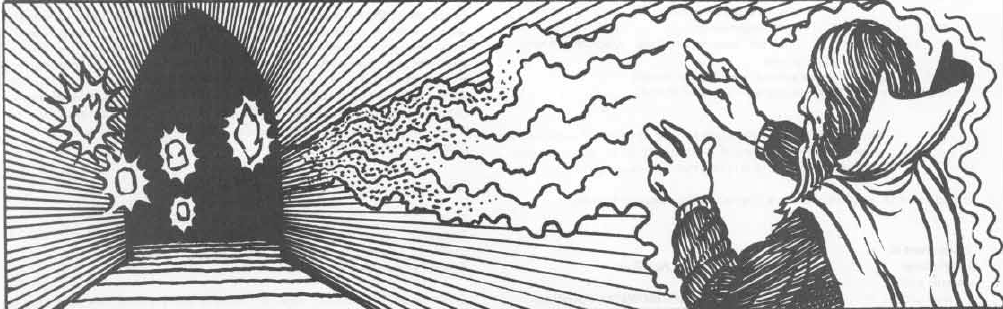
Wizard Orbs from the AD&D PH


Rank 1 Genius Spells:


Read the Signs/Wizard Eyes

This spell allows the caster to read the nature of phenomenon normally too ephemeral or esoteric to easily observe. This includes being able to comprehend magical runes, learn adjectives of artifacts, or understand effects of powerful abilities.


Present/Wizard Grab

This spell allows the Genius to magically cause an object which is visible within 10 feet of them to appear in their hand. If there are complications (intervening objects, partial view, tightly held/fastened objects, ect.) then the spell has a chance to fail. This spell can also be cast in reverse to instead magically place an object in the Genius' hand somewhere within 10 feet with the same restrictions.


Stick/Wizard Glue

This spell causes the Genius to be able to create a thick, gooey substance which hardens after a round into an all but unbreakable adhesive. This glue can be made for 1 round/lvl of the Genius after casting.


Grease/Wizard Grease

This spell allows the Genius to spread a slippery and flammable oil like substance over an area or object. Handling greased objects or walking on greased surfaces is incredibly difficult, and requires regular checks to avoid failure. Each casting provides enough grease to cover about an 100 sq. ft. area plus 10 sq. ft. /lvl of the Genius.


Fog/Wizard Mist

This spell allows the Genius to create a thick soupy mist which lowers visibility to about 10 feet and hampers the effects of fires. The Genius can make 100,000 cub. ft. plus another 10,000 cub. ft./lvl, and the fog lasts about an hour.


Escape/Wizard Legs

This spell give the Genius' target powerful locomotion abilities allowing them to run and jump about twice as fast or far as normal. This effect lasts about 1 hour/lvl of the Genius.


Dancing Lights/Wizard Orbs

This spells creates a few flying glowy orbs which the Genius can control. These orbs can fly at a rapid pace anywhere the Genius can see, can provide reasonable illumination, and last as long as the Genius is able to concentrate on them.

A Long Awaited Return

Hello my numerous and avid readers, I'm happy to announce that my hiatus has ended and I am now here to post nonsense once again. In addition to working on my programming project, I am hoping to get back on the ball on writing rpg nonsense again, and will hopefully be posting the relevant ideas here as I work through them.

In addition, for this, my "summer of freedom," I will be trying to post updates on how well I am keeping up with the goals I have set for myself. I'm not sure yet if I want to post these daily or weekly, but I suspect in addition to obvious and boring posts regarding whatever nonsense I come up with, there will be nonsense posts about whatever obvious and boring things I have been doing or failing to do over the course of the week.

I have some ideas that I'm sure will be arriving here shortly, so look forward to more rambles in the coming days.